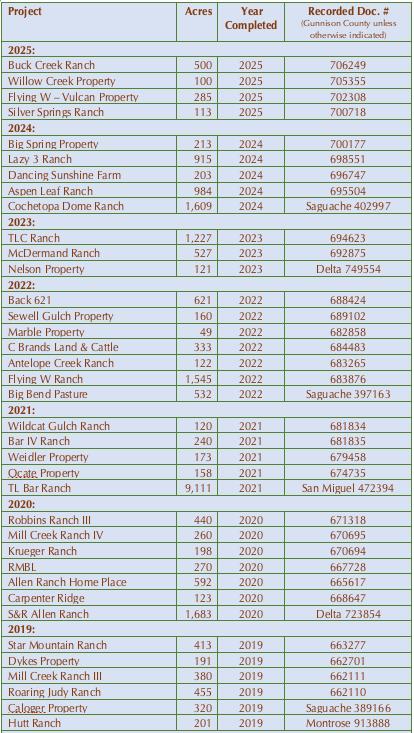
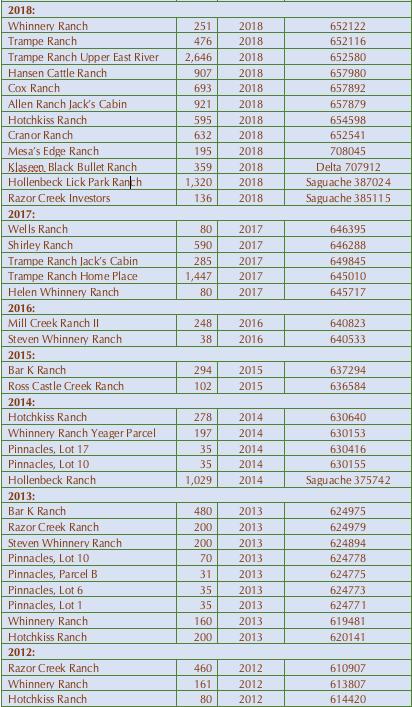
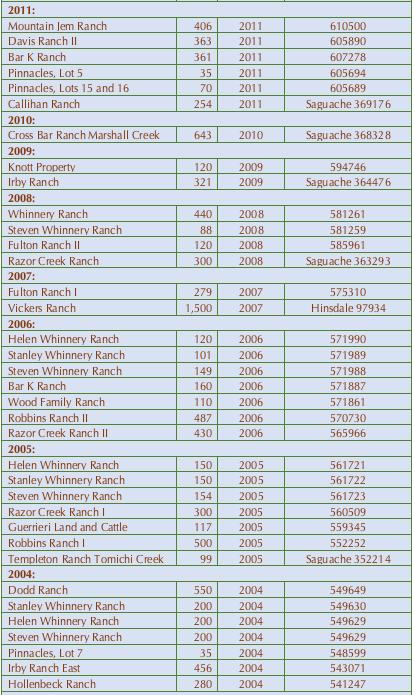
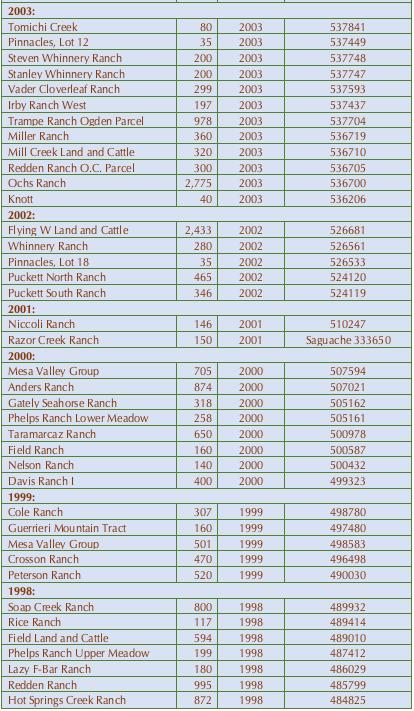
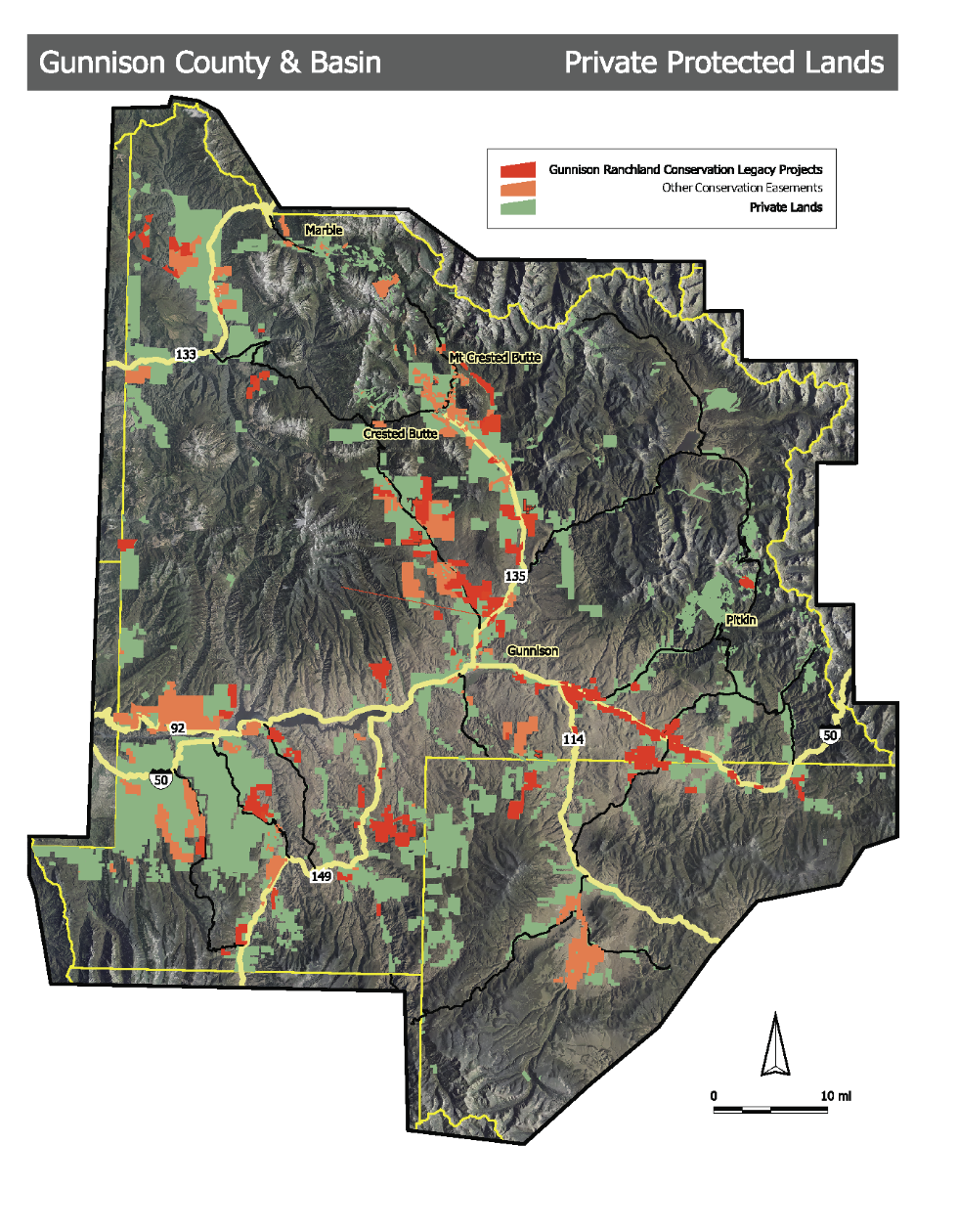
Completed Projects The following chart lists GRCL conservation easement projects, the number of acres conserved and the public record document number for the conservation easement. All conservation easements are recorded in the public record of the county in which the property is located. We currently are working on 10 new projects for 2026-2027. Each project takes from one to three years to complete. The map following the chart shows the locations of the conservation easements.
Tomichi Creek Valley In 1995, when we began to think about a process for assisting ranchers with their conservation goals, we wanted to respect landowners by not prioritizing specific landscapes. Instead, we would maintain a “first-come, first-served” list of willing ranch families, try to find funding for each, and hopefully be able to persist for however long it takes to meet their needs.
Initially, grant sources were skeptical that we could achieve conservation without creating a priority system. We asked for their patience, confident that over time the result would be the same, but achieved without the hard feelings that can arise from pitting those on a priority list against those who are not. Fortunately, grant sources were sympathetic after hearing from local ranchers, and we were able to proceed as we preferred.
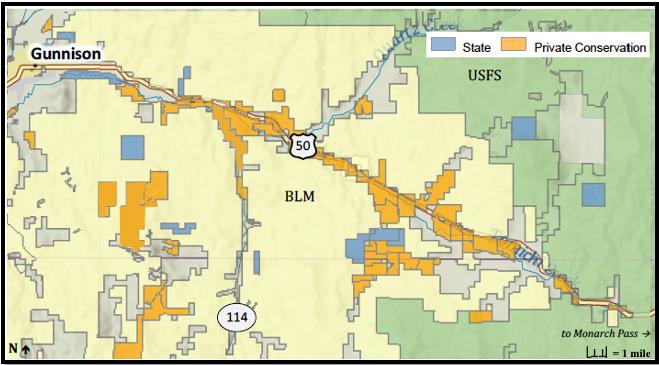
This map of conserved private lands in the Tomichi Creek Valley shows the result. The map tells a story of landowners with a strong conservation ethic. Benefits from their actions are perpetual, increasing in significance as time moves on:
- Water rights in Tomichi Creek and its tributaries are tied to the land through conservation easements.
- Neighbors have ranchers as neighbors.
- Permanent prohibitions against property division and strict restrictions on residence numbers let the county know where expanded services will not be required.
- Agricultural land is being bought and sold among ranchers at reduced prices. Subdivision and development are no longer options for real estate speculation.
- Wildlife populations, especially Gunnison sage-grouse but also migratory big game and numerous smaller species, thrive on conserved habitat that is adjacent to vast expanses of public lands.